
Mastering the Art of Grilling the Perfect Ribeye Steak at Home
Tired of spending a fortune at high-end steakhouses just to savor a perfectly cooked ribeye? What if we told you that achieving that restaurant-quality steak at home is not only possible but incredibly easy and quick? Grilling a succulent ribeye steak is one of the most rewarding culinary experiences, transforming a simple cut of beef into an unforgettable meal. This comprehensive guide will equip you with all the knowledge and techniques needed to grill the perfect ribeye steak, impressing your family and friends without breaking the bank.
Many home cooks might feel intimidated by the idea of grilling steak, fearing they’ll ruin an expensive cut of meat. Rest assured, with the right approach, you can become a grilling expert. I personally honed my beef cooking skills after an enlightening trip to Wooster, Ohio, with Certified Angus Beef. While that experience focused more on holiday roasts, it sparked a deep dive into understanding different cuts and their ideal cooking methods. Their fabulous website remains my go-to resource for detailed information on preparing any beef cut imaginable.
Why Choose Ribeye for Grilling?
Among the myriad of beef cuts available, the ribeye steak stands out as a prime candidate for grilling, celebrated for its exceptional flavor and tenderness. Other excellent choices for grilling include strip steaks and flank steaks, but the ribeye truly shines. It’s cut from the rib section of the cow, known for its rich, buttery taste and melt-in-your-mouth texture.
What makes the ribeye particularly special is its generous marbling – those exquisite streaks of intramuscular fat distributed throughout the meat. This marbling is crucial; as the steak cooks, the fat renders, basting the meat from within, resulting in an incredibly juicy, flavorful, and tender steak without requiring excessive effort or complicated techniques. It’s a forgiving cut, making it ideal for both novice and experienced grillers seeking maximum flavor with minimal fuss.
Essential Tools and Ingredients for Success
Before you even light your grill, gathering the right tools and ingredients is paramount. Preparation is key to a stress-free and successful grilling session.
Your Shopping List:
- High-Quality Ribeye Steaks: Aim for choice-grade or higher, with good marbling. Thickness is important – ideally 1 to 1.5 inches for even cooking and a beautiful sear.
- Coarse Sea Salt or Kosher Salt: Essential for seasoning.
- Freshly Ground Black Pepper: Complements the richness of the beef.
- Garlic Powder: Adds a subtle aromatic layer without burning like fresh garlic.
- Optional: Onion powder, paprika, or your favorite steak rub for added complexity.
Grilling Equipment:
- A Reliable Grill: Whether you prefer gas or charcoal, ensure your grill is clean and in good working order. For gas grills, check your propane tank!
- Long-Handled Tongs: For safely handling and flipping the steaks.
- Instant-Read Meat Thermometer: Absolutely crucial for achieving perfect doneness. This eliminates guesswork.
- Clean Platter or Cutting Board: For resting the steaks after grilling.
- Grill Brush: To clean grates before and after use.
Step-by-Step Guide to Grilling the Perfect Ribeye
Grilling the perfect steak is an art form, but one that is easily mastered with practice and adherence to a few key principles. Follow these steps for an unparalleled grilling experience.
1. Steak Preparation – The Foundation of Flavor
Remove your ribeye steaks from the refrigerator at least 30-60 minutes before grilling. This allows them to come closer to room temperature, ensuring more even cooking from edge to edge. A cold steak hitting a hot grill will cook unevenly, often resulting in an overcooked exterior and a cold center.
Pat the steaks dry thoroughly with paper towels. Excess moisture on the surface can prevent a good sear and crispy crust. Once dry, generously season all sides of the steaks with salt, freshly ground black pepper, and garlic powder. Don’t be shy with the seasoning; a good steak needs bold flavor. The salt will draw some moisture out initially, then dissolve and create a flavorful crust.
2. Preheat Your Grill to Perfection
Whether you’re using a gas or charcoal grill, preheating is non-negotiable. You want a scorching hot surface to create that beautiful, flavorful crust. Aim for a grill temperature between 500-550°F (260-290°C).
- For Gas Grills: Turn all burners to high, close the lid, and let it preheat for 10-15 minutes.
- For Charcoal Grills: Light a chimney starter full of charcoal and wait until the coals are ash-gray. Spread them evenly or create a two-zone fire (direct and indirect heat) for more versatility. Close the lid for 5-10 minutes to heat the grates.
Once hot, clean the grill grates with a wire brush to remove any residual food particles. A clean grate prevents sticking and ensures direct contact for searing.
3. The Grilling Process – Searing and Flipping
Carefully transfer the seasoned steaks to the preheated grill. You should hear an immediate sizzle – that’s the sound of a perfect sear forming!
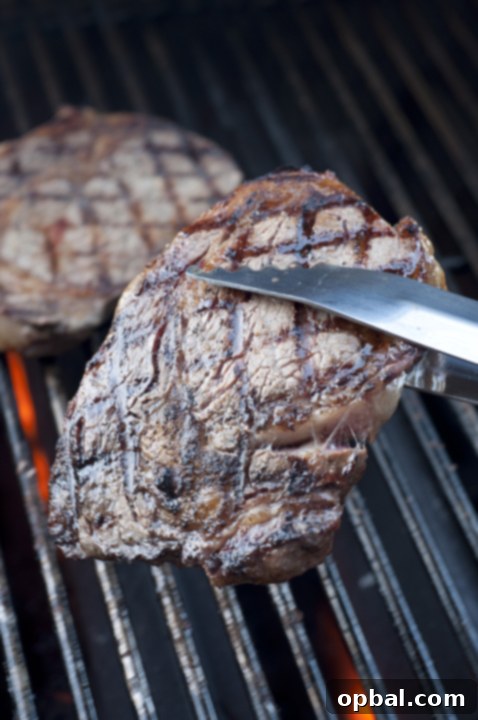
For those coveted professional-looking diamond grill marks, employ this simple technique:
- Place the ribeye steaks on the grill with the ends pointing at approximately 10 o’clock and 4 o’clock positions.
- After 1-2 minutes, once a good sear has formed, rotate the steaks clockwise so the ends are now at 2 o’clock and 8 o’clock. This creates the first set of crosshatch marks.
- After another 1-2 minutes, flip the steaks over and repeat the process on the other side. This ensures a beautiful, even crust and those impressive grill marks on both sides.
The total cooking time will vary depending on the thickness of your steak and your desired level of doneness. For a 1 to 1.5-inch thick ribeye, you’re looking at approximately 4-6 minutes per side for medium-rare.
4. Achieving Desired Doneness – The Thermometer is Your Friend
This is where your instant-read thermometer becomes invaluable. Visual cues are helpful, but internal temperature is the most accurate way to ensure perfection. Remember, you can always cook a steak longer if it’s underdone, but you can’t reverse an overcooked steak. When in doubt, err on the side of rare!
Insert the thermometer into the thickest part of the steak, avoiding any bones. Here’s a general guide for internal temperatures (remove steaks from heat 5°F before desired temperature, as they will continue to cook while resting):
- Rare: 125-130°F (52-54°C)
- Medium-Rare: 130-135°F (54-57°C) – *Our recommendation for ribeye*
- Medium: 135-140°F (57-60°C)
- Medium-Well: 140-145°F (60-63°C)
- Well-Done: 150°F+ (66°C+) – *Generally not recommended for ribeye as it can become tough.*
5. The Crucial Resting Period
Once your steaks reach the desired internal temperature, remove them from the grill and transfer them to a clean plate or cutting board. Cover them loosely with foil and let them rest for at least 5-10 minutes.
This resting period is perhaps the most critical, yet often overlooked, step. During cooking, the muscle fibers contract, pushing juices to the center of the steak. If you cut into it immediately, those delicious juices will spill out, leaving you with a dry steak. Resting allows the muscle fibers to relax and the juices to redistribute evenly throughout the meat, ensuring every bite is moist and flavorful. Patience is a virtue when it comes to steak!
6. Slice and Serve
After resting, slice your ribeye against the grain for maximum tenderness. Serve immediately with your favorite sides.
Common Grilling Mistakes to Avoid
Even with the best intentions, a few common errors can derail your perfect ribeye. Be mindful of these pitfalls:
- Not Preheating the Grill Enough: A cool grill leads to steaming, not searing, resulting in a gray, unappetizing crust.
- Over-Flipping: Resist the urge to constantly move your steak. Let it sear undisturbed to develop a crust. Flip only once or twice.
- Crowding the Grill: If you put too many steaks on the grill at once, the temperature will drop, and the steaks will steam instead of sear. Cook in batches if necessary.
- Cutting Into the Steak Too Soon: As emphasized, skipping the resting period will result in a dry steak.
- Under-Seasoning: Steak needs a generous amount of salt and pepper to bring out its natural flavors.
Elevate Your Ribeye Experience
While a perfectly grilled ribeye needs little adornment, you can further enhance your meal with simple additions:
- Compound Butter: A pat of herb butter (parsley, chives, garlic mixed with softened butter) melting over the hot, rested steak adds an extra layer of richness and flavor.
- Fresh Herbs: A sprinkle of fresh rosemary or thyme can beautifully complement the beef.
- Accompaniments: Serve your ribeye with classic sides like baked potatoes, grilled asparagus, a crisp garden salad, or creamy mashed potatoes.
If you’re a fan of rich beef dishes, I’m absolutely positive you’ll adore these Philly Cheesesteak Baked Egg Rolls, which make a fantastic dinner or appetizer. For a lighter, yet equally flavorful option, my friend Lisa’s Southwestern Steak Salad with Jalapeño Ranch Dressing is an absolute must-try. I’m definitely adding that to my cooking list soon!
- 4 choice rib-eye steaks, about 1 to 1.5 inches thick
- 2 teaspoons Coarse Sea Salt or Kosher Salt, or to taste
- 1 teaspoon Freshly Ground Black Pepper, or to taste
- 1 teaspoon Garlic Powder, or to taste
- Optional: 1 tablespoon olive oil (for rubbing steaks before seasoning for extra crust)
- Prepare Your Steaks: Remove ribeye steaks from the refrigerator 30-60 minutes before grilling to bring them to room temperature. Pat them completely dry with paper towels. If desired, rub lightly with olive oil before seasoning.
- Season Generously: Season all sides of the steaks generously with garlic powder, salt, and freshly ground black pepper, ensuring an even coating.
- Preheat Grill: Prepare your grill (gas or charcoal) according to manufacturer’s instructions or until it’s very hot (about 500 – 550°F / 260-290°C). Clean the grates thoroughly with a grill brush.
- Sear the Steaks: Transfer the seasoned steaks directly to the preheated, hot grill grates – they should sizzle loudly.
- Create Diamond Grill Marks (Optional): For impressive grill marks, place steaks with ends at 10 and 4 o’clock. After 1-2 minutes, rotate clockwise so ends are at 2 and 8 o’clock. After another 1-2 minutes, flip the steaks over and repeat the pattern on the second side.
- Continue Grilling to Desired Doneness: Continue grilling, flipping once or twice more as needed. For a 1-inch thick ribeye, cook about 4-6 minutes per side for medium-rare. Use an instant-read thermometer for accuracy. Aim for 130-135°F (54-57°C) for medium-rare, removing from heat at 125-130°F.
- Rest the Steaks: Remove steaks to a clean plate or cutting board and let them rest for at least 5-10 minutes before serving. This crucial step allows the juices to redistribute, ensuring a tender and moist steak.
- Enjoy: Slice against the grain and serve immediately. Enjoy your perfectly grilled ribeye!
Conclusion
Grilling the perfect ribeye steak doesn’t have to be a daunting task reserved for professional chefs or expensive restaurants. With a little preparation, attention to detail, and the right techniques, you can achieve a wonderfully tender, juicy, and flavorful steak right in your backyard. So fire up your grill, follow these steps, and get ready to enjoy one of the easiest and most satisfying meals imaginable. Happy grilling!