
Cruising with a Baby: Essential Tips for a Smooth Family Voyage (Based on Our Royal Caribbean Experience)
Embarking on a cruise with a baby might sound daunting, but as seasoned cruisers, my husband (Mr. Wishes) and I can assure you it’s an incredibly rewarding experience! We recently took our adorable 10-month-old daughter, Eliza, on her very first cruise aboard Royal Caribbean’s magnificent Symphony of the Seas. Having previously explored this brand-new vessel during its media cruise, we were already enchanted. Our family adventure exceeded all expectations, proving that cruising with an infant can be not just manageable, but truly magical. This comprehensive guide shares our best tips for taking a baby on a cruise, helping other families navigate the high seas with their little ones with confidence and joy.
Before our trip, I encountered numerous articles cautioning against cruising with a baby. I’m so glad we didn’t heed those warnings! Eliza thrived during the entire journey, beaming with smiles from start to finish. It was clear she was having the time of her life, and so were we, experiencing the joy of travel through her eyes.
Having embarked on countless cruises before, we knew this trip would be different from our child-free voyages. And indeed it was, but in the best possible way. With a baby in tow, flexibility and planning are key. We discovered numerous strategies to ensure our vacation felt like a true getaway, allowing us to relax and create lasting family memories. The Symphony of the Seas offered an incredible array of amenities and services tailored for families, making our journey remarkably smooth and enjoyable.
Understanding Cruise Line Age Restrictions for Infants
The very first step in planning your family cruise is to confirm the specific age requirements for infants. Most major cruise lines, including Royal Caribbean, mandate that babies must be at least six months old on the day of embarkation for standard itineraries. This regulation is primarily due to the limited medical facilities available at sea and the potential for a baby to require specialized care. Therefore, it’s crucial to verify your child meets this minimum age before booking.
For longer or more exotic voyages, such as transatlantic, transpacific, or Hawaiian cruises, the age restriction typically increases. Infants must generally be at least 12 months old at the time of sailing for these itineraries. Additionally, any cruise featuring three or more consecutive days at sea will also require infants to be 12 months old on the first day of the cruise. Always double-check your chosen cruise line’s specific policies to avoid any last-minute disappointments. These rules are in place for the safety and well-being of your little one, ensuring they are robust enough for extended travel and time away from immediate land-based medical support.

Another important consideration is documentation. For closed-loop cruises (those that begin and end in the same U.S. port), babies typically do not need a passport. However, you will need to present a government-issued birth certificate for your child at check-in on the first day and again when passing through immigration upon returning home. If your itinerary includes international travel where the ship embarks or disembarks in a foreign port, or if it’s a one-way international cruise, your baby will most likely need a passport. Confirm all required travel documents well in advance of your sailing date.
Understanding Cruise Fares for Infants
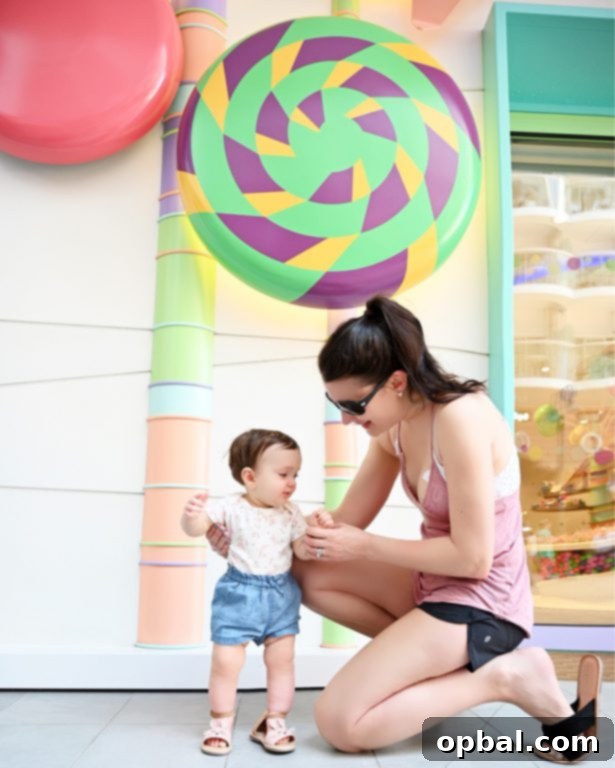
Many first-time parents assume that babies might travel for free or at a significantly reduced rate. However, on most major cruise lines, including Royal Caribbean, infants are charged a cruise fare, just like any other passenger onboard. This is because they occupy a space, even if they don’t consume adult-sized meals or participate in all activities. The good news is that if your child is the third or fourth passenger in your cabin, you will typically pay a reduced rate compared to the first two adult fares. This makes sense as the cabin space is fixed, and additional passengers generally incur a lower per-person cost. Always factor this into your budget when planning your family cruise.
Essential Items to Pack When Cruising with a Baby
Packing for a cruise with a baby requires strategic planning. Here’s a detailed list of what we found indispensable:
- Crib or Pack ‘n Play: Most cruise lines offer a complimentary crib or pack ‘n play for your cabin upon request, complete with bedding. These are usually available on a first-come, first-served basis, so it’s wise to reserve one as early as possible, ideally a few weeks before your sailing. We opted to bring our own compact travel crib because it folded down incredibly small, actually saving more space in our cabin than the larger pack ‘n play provided by Royal Caribbean. Assess your cabin size and your baby’s sleeping habits to decide what works best for your family.
- Diapers and Wipes: Bring more than you think you’ll need! Onboard prices for baby essentials are notoriously high. To save luggage space for the flight, we only packed enough diapers and wipes for our travel day to Miami. Upon arrival, we made a quick stop at Target to stock up on enough supplies for the entire cruise. A clever packing hack: line the bottom of your suitcase with diapers; they take up less room when spread flat rather than in bulky packages.
- Baby Medications and First Aid: Be prepared for minor ailments. Pack essentials like diaper rash cream, children’s Tylenol or Motrin, a baby thermometer, and any prescription medications your baby might need. Remember, access to a pharmacy can be limited or costly at sea and in some ports.
- Sun Protection: Cruising often means sunny destinations. A wide-brimmed sun hat, baby-safe sunscreen, and UV-protective swimwear are non-negotiable for protecting your little one’s delicate skin.
- Swim Diapers: Absolutely essential for designated baby splash areas. Regular diapers swell and can clog filtration systems, so swim diapers are a must for any water play.
- Teething Toys: Keep a variety of teething toys on hand to soothe sore gums, especially during meal times or quiet moments in the cabin.
- Books and Small Toys: While there’s plenty to see, having a few familiar coloring books or regular board books and small, quiet toys can be a lifesaver for downtime, travel, or keeping them occupied in dining rooms.
- Pacifiers: If your baby uses a pacifier, bring several! They can easily get lost, and having spares prevents meltdowns.
- Antibacterial Wipes/Hand Sanitizer: Cruise ships are clean, but constant sanitizing is a good practice, especially before and after meals or touching public surfaces.
Choosing the Right Stroller for Your Cruise
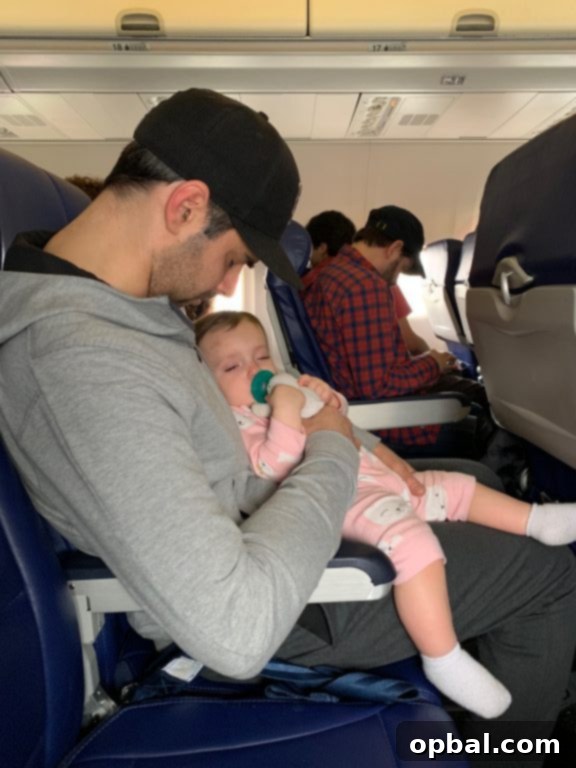
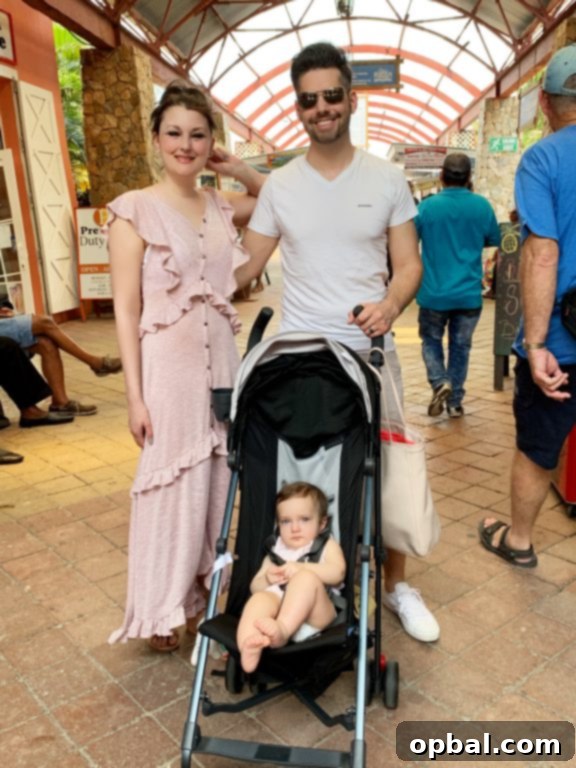
We own a robust, feature-rich stroller at home, but for the cruise, we opted for our lightweight Uppa Baby umbrella stroller. This proved to be one of our smartest decisions. Cruise ships, despite their grandeur, can have surprisingly narrow corridors and crowded public areas, especially elevators. Navigating a large, bulky stroller through these spaces can be incredibly challenging and frustrating.
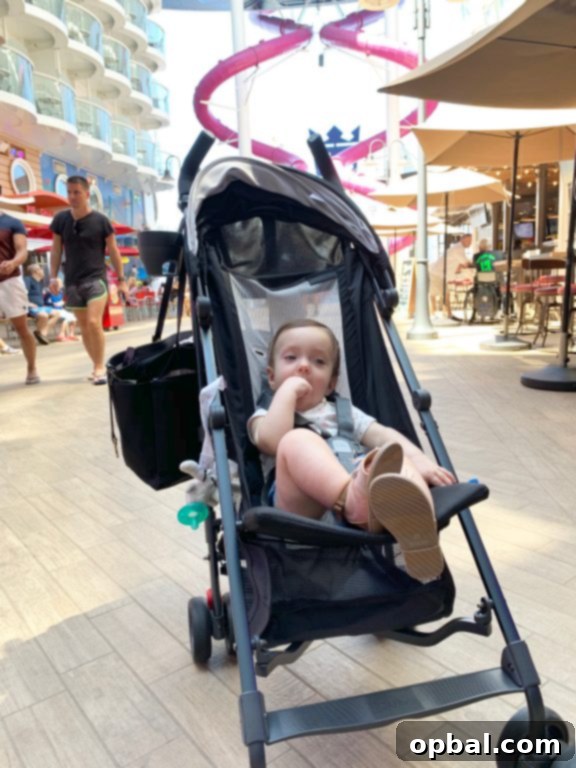
A compact, umbrella-style stroller folds down easily, making it simple to tuck into a cabin closet or a corner when not in use. Any strategy to save space in the typically smaller cruise cabins is a win! Despite its smaller size, our umbrella stroller was still comfortable for Eliza, offering a great sun shade, and she happily took many of her naps in it while we explored. While we did see families with larger strollers, the smaller model significantly enhanced our mobility and convenience onboard and in port.
Day-to-Day Essentials While Exploring the Ship and Ports
When you’re out and about on the ship or venturing into port, a few key items will make your day much smoother:
- Spare Outfit in a Ziploc Bag: Always carry one or two spare outfits for your baby, sealed in a plastic Ziploc bag. This simple trick is a lifesaver for diaper blowouts, spilled food, or any unexpected messes. After a change, the soiled clothes can go right back into the bag, containing odors and preventing other items in your bag from getting dirty.
- Snacks and Sippy Cup: Keep your baby occupied and hydrated with their favorite snacks and a filled sippy cup. Eliza was often mesmerized by the vibrant activity on the ship, but having these on hand provided familiar comfort and prevented hunger-related fussiness.
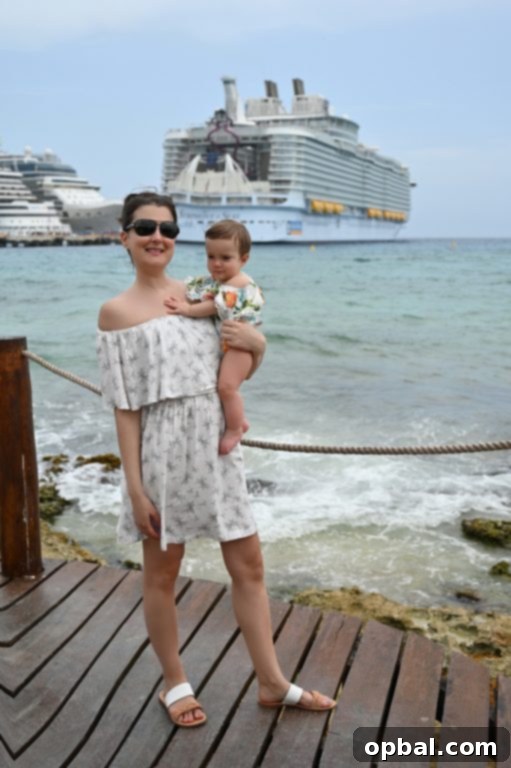
- Car Seats and Excursions: This is a critical point for safety. Many countries, especially in the Caribbean, do not have the same car seat laws or availability as the United States. We found that local taxis and shuttles in some ports did not offer car seats. Since we weren’t comfortable holding Eliza unsecured in a moving vehicle, we chose to forego certain excursions that required taxi travel to beaches or distant attractions. This decision actually turned out to be a blessing; it saved us money on expensive excursions and allowed us to explore the immediate port areas at our own pace, easily returning to the ship if Eliza needed a nap or feeding. It truly offered the best of both worlds – flexibility and peace of mind.
- Changing Facilities and High Chairs: Don’t expect changing tables in every restroom on the islands. Similarly, some local restaurants in port might not have high chairs. If having baby-specific facilities is a concern, your best bet is to stick to more Americanized areas, typically those located right near the cruise port, which are often better equipped to cater to families.
Dining Strategies with a Baby Onboard
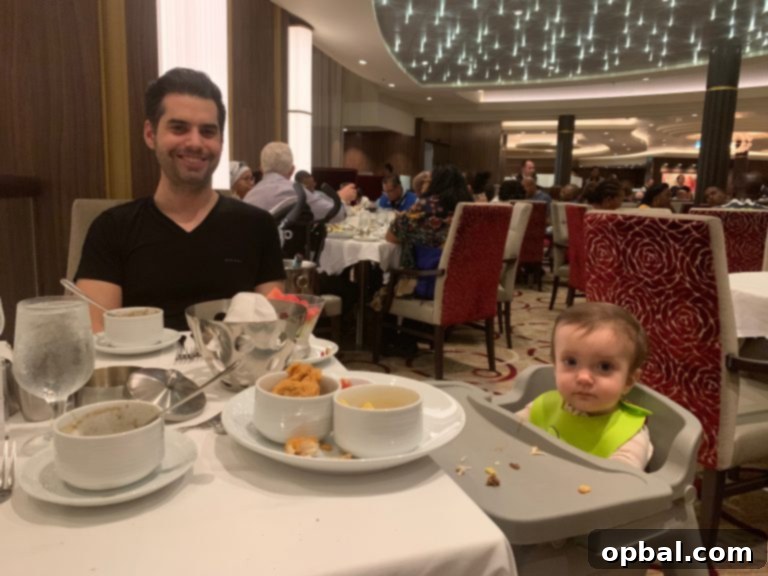
Feeding a baby on a cruise can be surprisingly easy. We rarely brought any special food to the dining room for Eliza. The ship’s main dining rooms and buffet restaurants usually offer a kids’ menu, and we often ordered something from there or shared portions of our own meals, suitable for her age and stage of solid food introduction. Since Eliza was already accustomed to solids and breastmilk, she adapted wonderfully to the available options.
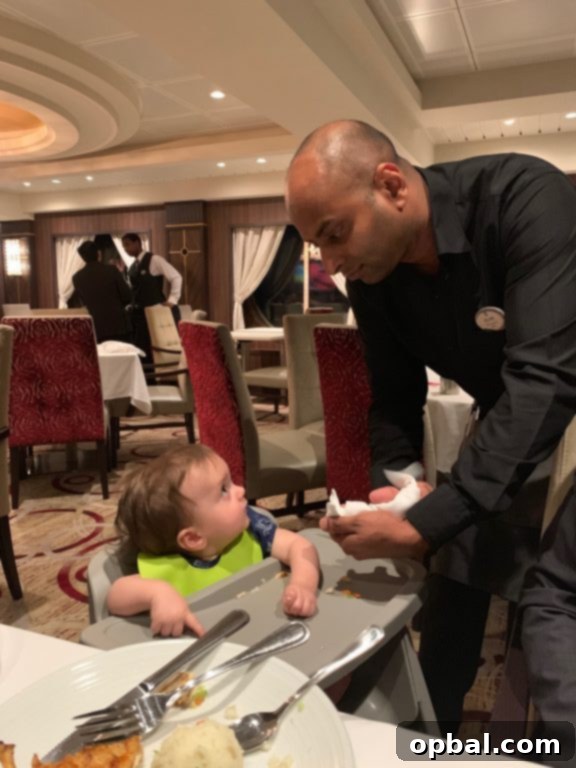
The “just ask” principle works wonders with the ship’s wait staff. They are incredibly accommodating and family-focused. We frequently found that waiters would automatically ask if we needed Eliza’s food pureed or cut into tiny, manageable pieces – without us even having to request it! This level of service is a huge advantage, saving you the hassle and luggage space of packing numerous jars of baby food. High chairs are readily available in all dining areas, just like in a land-based restaurant. If you don’t see one, simply ask the nearest staff member.
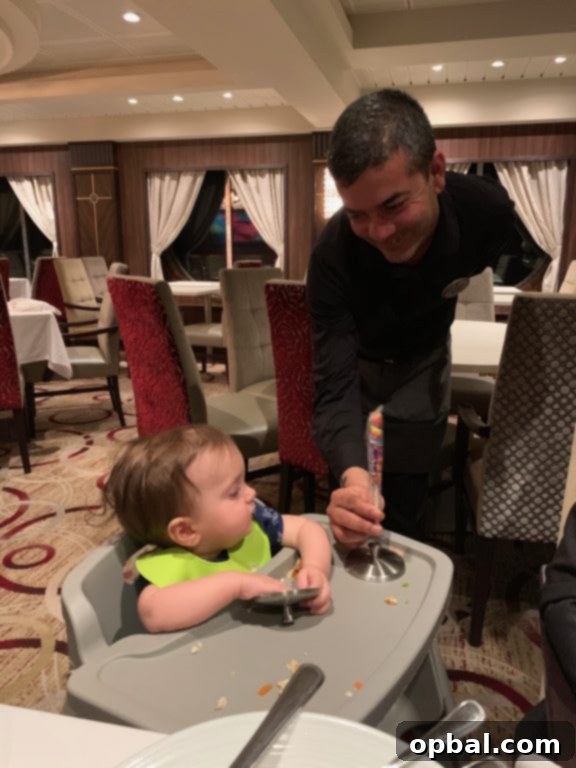
Dining in the main dining room each evening is a rather formal process, often involving multiple courses. A long, drawn-out meal might not seem ideal for a baby with a short attention span. However, Eliza surprised us! As long as she was continuously engaged—whether by eating, observing people, or interacting with the staff—she was content. The wait staff on Symphony of the Seas went above and beyond, entertaining Eliza with napkin animals and small distractions. If your baby isn’t used to restaurant settings, consider dining at the buffet or other casual venues for some meals, which offer more flexibility and quicker service. This was our choice for lunch and the final dinner, ensuring a relaxed experience for everyone.
Baby-Friendly Entertainment Onboard
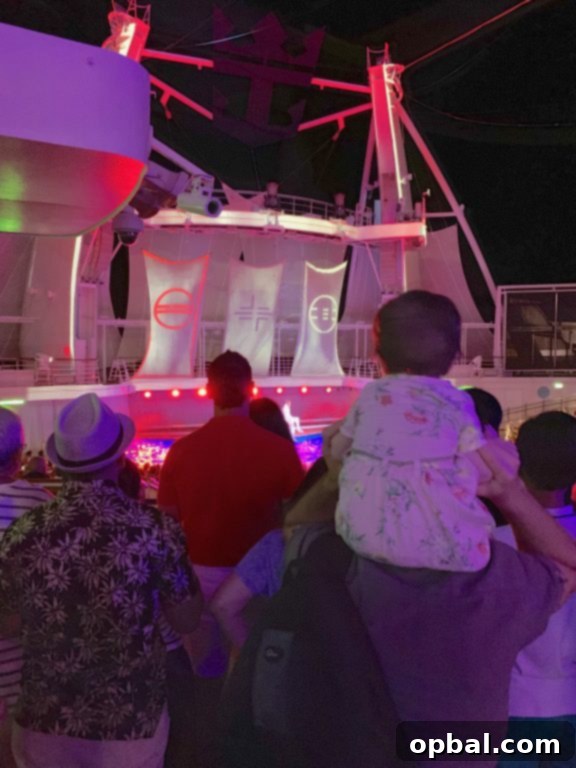
We initially assumed that having a 10-month-old meant missing out on most of the ship’s entertainment. We couldn’t have been more wrong! Eliza was incredibly captivated by the shows, especially the vibrant lights, music, and dancing. She even clapped along at appropriate moments, much to our delight!
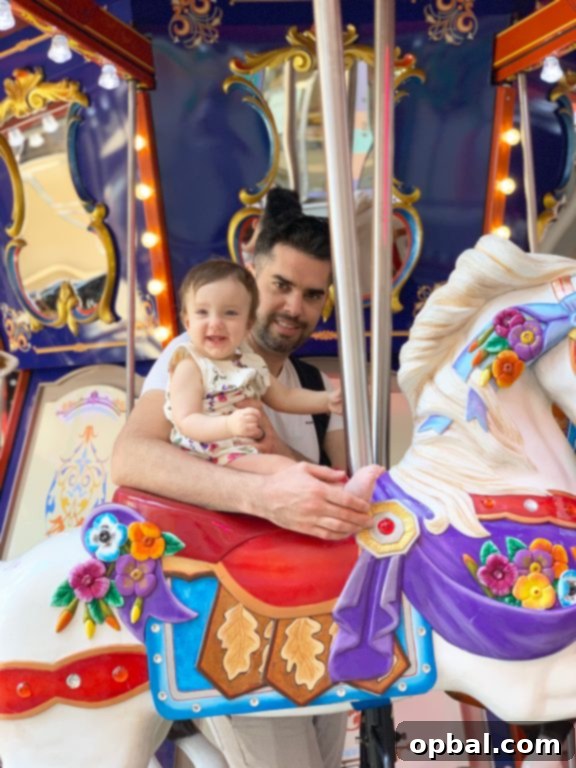
For Broadway-style productions, like “Hairspray” which was playing on Symphony of the Seas, we recommend sitting towards the back of the theater. This allows for a quick and discreet exit if your baby becomes restless or needs a change, minimizing disruption for other guests. Eliza particularly loved the music and managed to enjoy a good portion of the show from our vantage point.
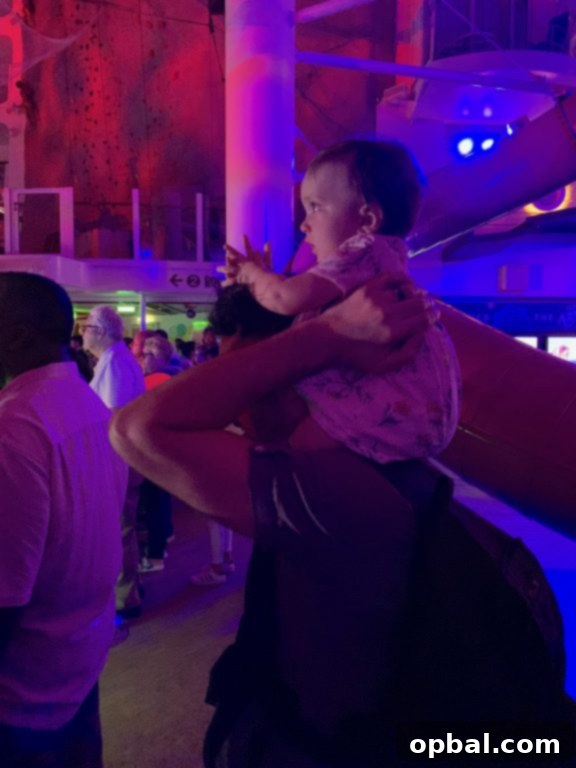
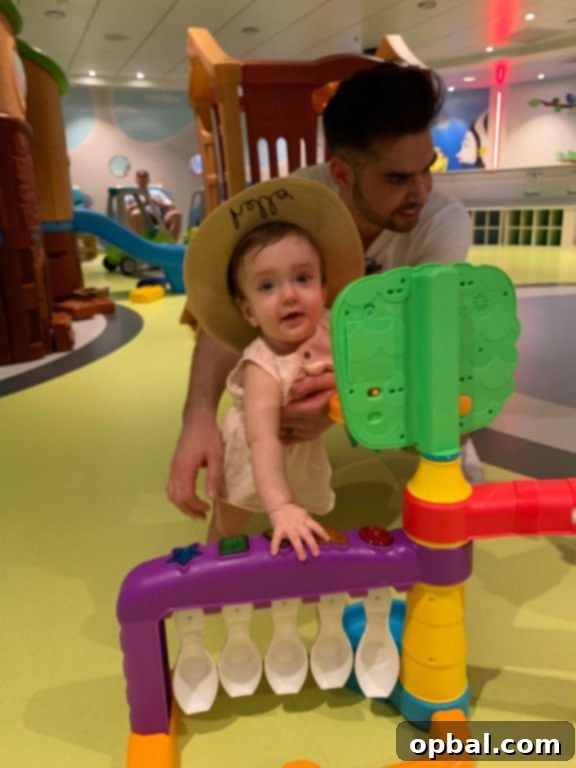
Beyond the shows, many ships, including Symphony of the Seas, feature dedicated play areas for small children. These spaces are often equipped with various toys and soft surfaces, providing a safe environment for babies to crawl, explore, and interact. Eliza spent several happy hours in this play zone, which was a wonderful reprieve from the confines of our cabin. It was particularly beneficial as she missed being able to freely crawl around as she does at home, making this feature one of our favorites.
Water Fun: Baby Splash Zones and Pool Policies
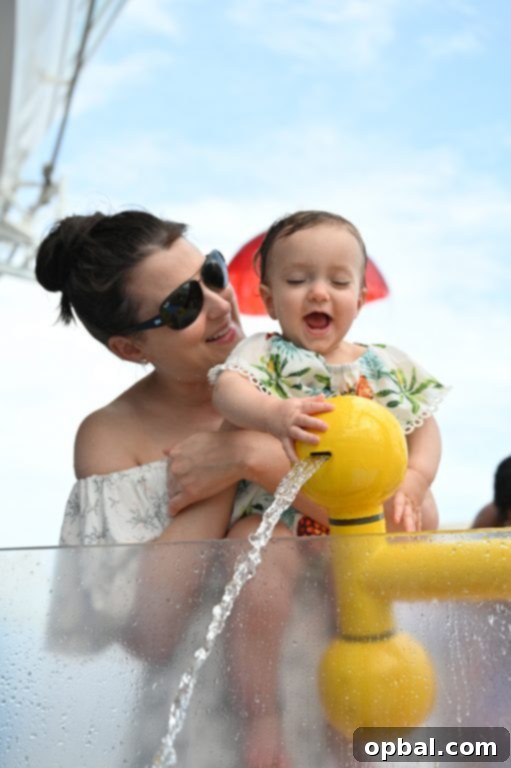
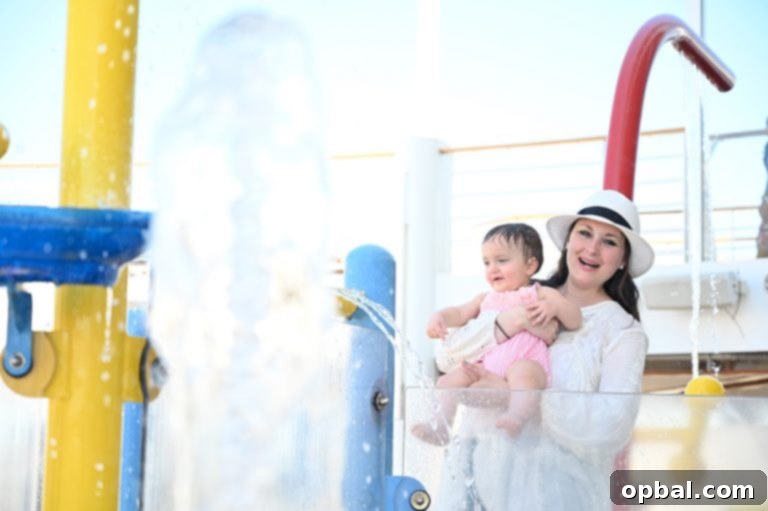
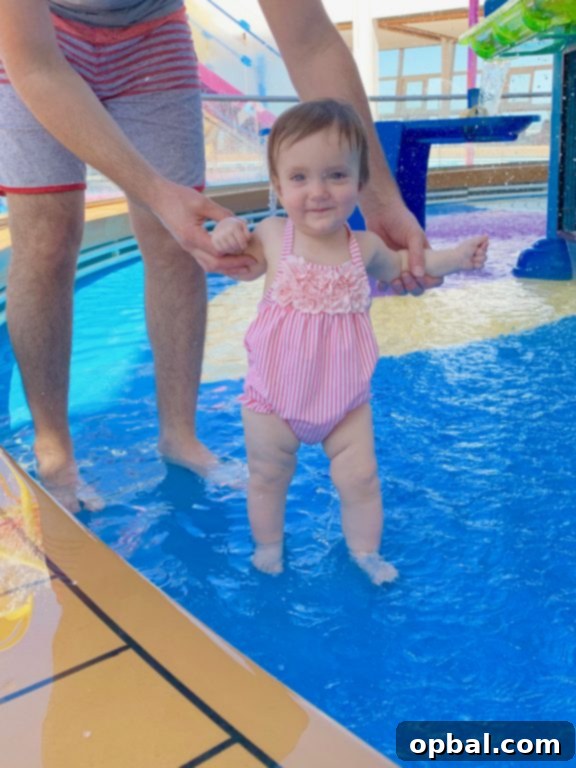
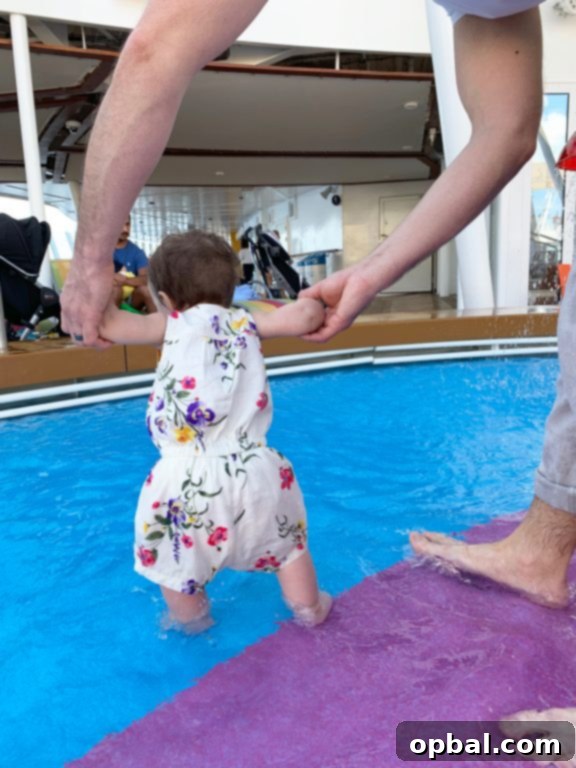
One of the standout features of newer cruise ships like Royal Caribbean’s Symphony of the Seas is the dedicated infant pool, often called a Baby Splash Zone. Typically, children who are not yet potty-trained are prohibited from entering main swimming pools onboard due to health regulations. However, these specialized splash zones offer a fantastic, safe alternative for diaper-wearing infants and toddlers.
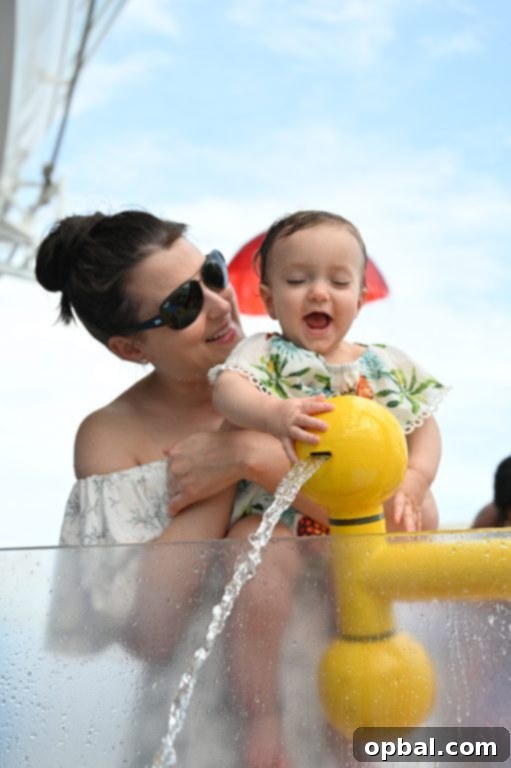
Eliza absolutely adored the Baby Splash Zone. It was designed with shallow water features, gentle sprays, and playful elements perfectly suited for little ones. The best part was knowing that it was exclusively for babies, meaning no larger, boisterous children running around, making it a calm and secure environment for infant water play. Remember to always use swim diapers in these areas.
Navigating Sleep: Sharing a Cabin with Your Infant
As mentioned, most cruise lines will provide a crib or pack ‘n play free of charge if you’re cruising with a baby. Royal Caribbean offers pack ‘n plays. It’s highly recommended to contact the cruise line a few weeks before your departure to confirm your request, as they won’t automatically place one in your cabin. Even if you bring your own, letting them know in advance is a good practice.
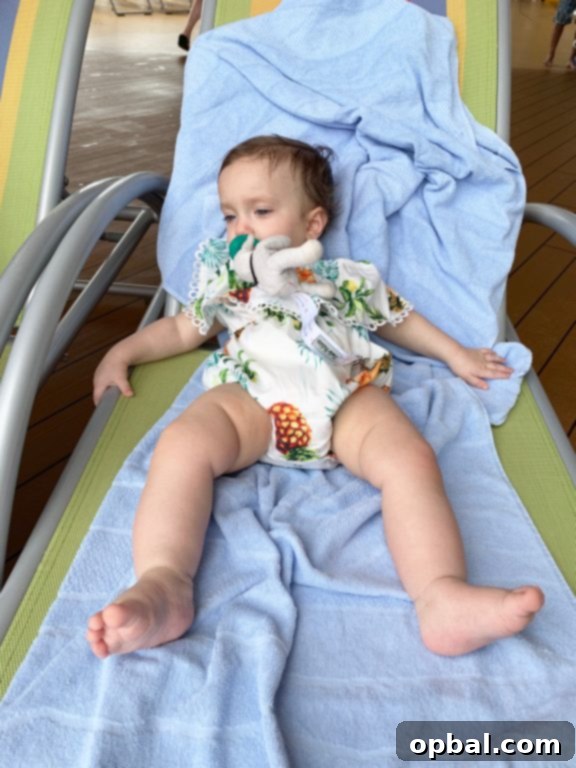
One of the biggest adjustments when cruising with a baby, especially if your child has transitioned to their own room at home, is sharing a single cabin. Eliza had been sleeping in her own room since 7.5 months old, and while she’s generally a good sleeper, she still wakes a couple of times a night, usually settling back down quickly. Being in the same room meant every little sound she made woke us up. Furthermore, to avoid disturbing neighboring cabins, we felt compelled to attend to her immediately when she cried, rather than allowing her to self-soothe as we would at home. This meant a few extra middle-of-the-night feedings for Eliza, which she certainly didn’t mind!
Consider bringing a portable white noise machine to help mask ambient sounds and create a more conducive sleep environment for your baby, and for yourselves. If your budget allows, booking a suite or two connecting cabins can provide invaluable extra space and separation, making overnight sleep much more restful for everyone. Alternatively, some parents use cabin dividers or hang blankets to create a visual barrier for their baby’s sleep space.
Utilizing Onboard Childcare Services: Royal Babies & Tots Nursery
For parents needing a break or wishing to enjoy adult-only activities, Royal Caribbean offers the “Royal Babies & Tots Nursery” on select ships, designed for children aged six months to 36 months. This fantastic service allows you to drop off your little one to be cared for by trained professional staff, typically for an hourly fee (around $8 per hour). The nursery provides a safe, engaging environment with a host of age-appropriate toys and activities. While we didn’t utilize this service on Eliza’s first cruise, we would absolutely consider it for future voyages.
It’s important to note that nursery space is often limited. We strongly recommend visiting the nursery on your first day onboard to reserve specific times, especially if you have a particular evening or excursion in mind. This service is incredibly useful for families wanting to experience a non-kid-friendly shore excursion, or for parents desiring a quiet, romantic dinner alone. Knowing this trustworthy childcare option is available offers immense peace of mind and flexibility, allowing you to tailor your cruise experience to your family’s needs and wishes.
For more insights into Royal Caribbean experiences, feel free to check out my detailed recaps of Royal Caribbean Anthem of the Seas and Royal Caribbean Harmony of the Seas.
Embark on Your Next Family Adventure: Cruising with Confidence!
Cruising with a baby might seem like a grand undertaking, but with proper planning and a flexible mindset, it can be an incredibly enriching and memorable family vacation. From navigating age restrictions and packing essentials to discovering baby-friendly dining and entertainment, our experience on Royal Caribbean’s Symphony of the Seas showed us that these voyages are not just possible, but genuinely enjoyable for the whole family. Don’t let apprehension hold you back from creating beautiful memories at sea with your little one. They grow so quickly, and these early travel experiences are truly priceless.