
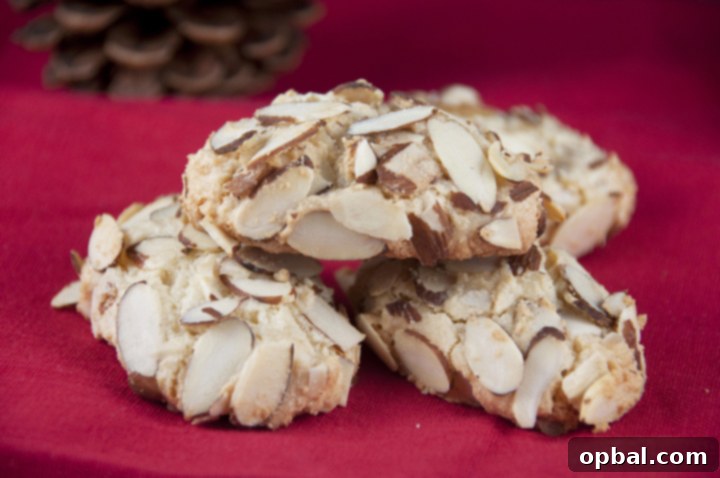
Grandma’s Cherished Italian Almond Macaroons: A Timeless Holiday Legacy
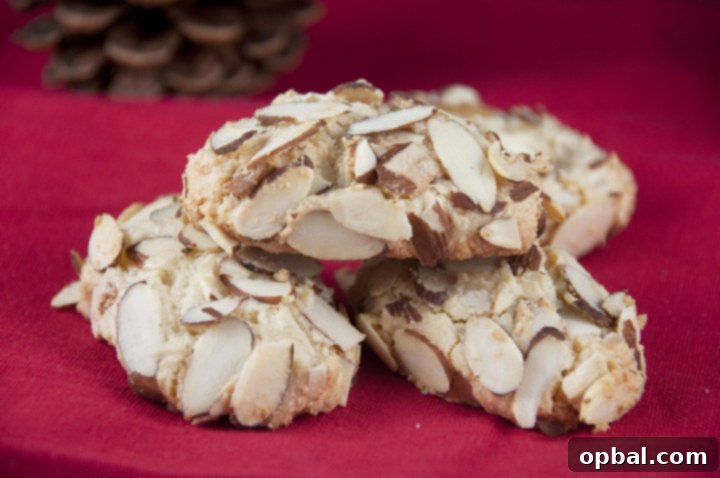
Every bite of these delightful Italian Almond Macaroons is a journey back in time, a sweet echo of holidays past and cherished family gatherings. This isn’t just any cookie recipe; it’s a culinary heirloom, lovingly passed down from my Italian grandmother, a woman whose kitchen was always the heart of our home. For countless years, she and her dear friend, Ruth, meticulously prepared these very macaroons, their laughter and stories infusing each batch with an extra layer of warmth and love.
While these versatile treats would undoubtedly brighten any festive occasion, they hold a particularly special place in our family’s Christmas traditions. Year after year, as the holiday season approaches, the aroma of toasted almonds fills our home, signaling the return of this beloved legacy. Sharing this recipe now, after a bustling holiday season that saw it momentarily slip my mind, feels like rediscovering a hidden treasure, and I sincerely hope to do this cherished almond macaroon recipe the justice it deserves.
The Enduring Charm of Italian Almond Macaroons
What makes these Italian Almond Macaroons so irresistibly charming? It’s their unique texture and profound almond flavor that set them apart. With a delicately crunchy exterior that gives way to a wonderfully soft, chewy, almost nougat-like interior, they offer a delightful contrast with every bite. The simplicity of their ingredients belies the complexity of their taste, making them a perfect embodiment of classic Italian baking – elegant, heartwarming, and utterly delicious.
These cookies are more than just a dessert; they are a bridge to our heritage, connecting us to the generations that came before. Each holiday season, as we gather around the table, these macaroons serve as a tangible reminder of family bonds, enduring traditions, and the simple joy of sharing something truly special. They embody the spirit of generosity and togetherness that defines the festive period, making them an indispensable part of our celebrations.
Deciphering the Delight: Macaron vs. Macaroon
Before diving deeper into the nuances of this exquisite recipe, let’s address a common point of confusion that often arises in the world of confections: the distinction between “macaron” and “macaroon.” Having been delightfully clueless myself for quite some time, a little research proved incredibly enlightening. It turns out, the words are not interchangeable spellings for the same treat, but rather refer to two distinctly different, albeit equally delicious, sweets.
Both terms, fascinatingly, derive from the Italian word “ammaccare,” meaning “to crush” – a nod to the almond paste often used in their creation. However, this linguistic root is where their similarities largely conclude, setting them on divergent paths in the confectionery landscape.
The French Macaron: A Symphony of Delicate Shells
A macaron, specifically, refers to the elegant, often vibrantly colored meringue-based sandwich cookie. It typically consists of two delicate, crisp almond flour shells, expertly crafted from ground almonds, egg whites, and granulated or powdered sugar. These shells boast a distinctive “foot” – a ruffled edge that forms as they bake – and are traditionally filled with rich buttercream frosting, ganache, or a tangy fruit spread. French macarons are renowned for their delicate texture: crisp on the outside, slightly chewy in the center, and bursting with sophisticated flavors. These are the picturesque confections you often spot gracing the windows of high-end bakeries, sometimes even dipped in chocolate for an extra touch of decadence. Their preparation is often considered an art form, requiring precision and patience.
The Italian Macaroon: Rustic Charm and Chewy Goodness
In contrast, the type of macaroon I am sharing today – the almond or coconut macaroon, sometimes referred to as “congolais” in France – presents a more rustic and comforting profile. While sharing the “almond” base, these macaroons are not typically sandwiched and possess a delightfully different texture. They are characterized by a pleasingly crunchy, golden-brown exterior that envelops an incredibly soft, moist, and wonderfully chewy interior. This texture is often likened to a soft nougat, providing a satisfying chewiness that is utterly addictive.
Another intriguing aspect of the almond or coconut macaroon is its historical significance, particularly its frequent appearance during Passover. Because traditional macaroons contain no flour (relying instead on almond paste and egg whites), they naturally align with the dietary restrictions of Passover, making them a popular and beloved treat during this time. This interesting detail further underscores the versatility and enduring appeal of these simple yet profound cookies, making them a perfect choice for various cultural and holiday celebrations beyond Christmas.
So, there you have it – your baking lesson for the day! I certainly learned a great deal, and I hope this clarity enhances your appreciation for these unique Italian Almond Macaroons. Understanding the nuances not only satisfies curiosity but also allows us to fully savor the authentic charm of Grandma’s recipe, which unequivocally falls into the category of the chewy, traditional macaroon.
Crafting Grandma’s Italian Almond Macaroons: A Guide to Perfection
Creating these traditional Italian Almond Macaroons is a truly rewarding experience, and with a few key tips, you can ensure each batch is as perfect as Grandma used to make. The beauty of this recipe lies in its relative simplicity, relying on quality ingredients and a gentle touch.
The Essential Ingredients: Flavor and Texture Foundations
- Egg Whites: These are the magic behind the macaroon’s light yet chewy texture. Whipped to stiff peaks, they provide structure and airiness, crucial for that satisfying bite. Ensure your egg whites are at room temperature for optimal whipping results.
- Almond Paste: This is the star ingredient, delivering the rich, authentic almond flavor. Don’t confuse it with almond flour; almond paste is a denser, sweeter blend of finely ground almonds and sugar, bound with a small amount of egg white or syrup. Quality almond paste makes a significant difference in the final taste and texture of your macaroons.
- Granulated Sugar: Providing sweetness and aiding in the stabilization of the egg whites, granulated sugar contributes to the macaroon’s subtle crispness and golden hue.
- Sliced Almonds: Used for coating, these add a wonderful textural contrast and an extra layer of nutty flavor, making the macaroons visually appealing and even more delicious.
Step-by-Step Mastery: Tips for Impeccable Results
- Whipping Egg Whites: Begin by whipping your egg whites. The goal here is to achieve stiff peaks, meaning when you lift the whisk, the peaks hold their shape firmly. This usually takes about 5 minutes in a stand mixer. Be careful not to over-whip, as this can lead to dry macaroons.
- Sweetening and Stabilizing: Gradually add the granulated sugar to the whipped egg whites, continuing to whip until the mixture is glossy and holds even firmer peaks. The sugar helps stabilize the meringue, contributing to the macaroon’s structure.
- Incorporating Almond Paste: This step requires a bit of care. Break up or cut your almond paste into smaller chunks before adding it to the egg white mixture. This makes it much easier to blend evenly. Gently fold in the almond paste; overmixing can deflate the egg whites and result in a denser cookie. Aim for a well-combined, somewhat sticky dough.
- Chilling is Key: Once the dough is mixed, roll it into a ball and chill it overnight or for several hours. This chilling period is crucial. It firms up the dough, making it much easier to handle and shape, and also helps the flavors meld beautifully, leading to a superior texture when baked.
- Shaping the Macaroons: After chilling, take approximately a tablespoon of dough for each cookie. Roll it into a 1.5-inch oblong shape. Consistency in size and shape is important for even baking.
- Coating with Almonds: Generously roll each shaped macaroon in sliced almonds. You may need to gently press the almonds into the dough to ensure they adhere well and cover all sides. This creates that irresistible crunchy exterior.
- Baking to Perfection: Preheat your oven to 300 degrees Fahrenheit (150 degrees Celsius). Baking these macaroons requires patience and attention to detail. If using two baking sheets, place one on the bottom rack and one on the middle rack, switching their positions halfway through the baking time (around 15-17 minutes). The baking time typically ranges from 30 to 35 minutes. You’re looking for the sliced almonds to be lightly toasted and crunchy, and the cookies themselves to develop a beautiful golden hue, but not too dark. An underbaked macaroon will lack the desired crunchiness and the deep almond flavor won’t fully develop. My oven, for example, took a full 35 minutes, and I found baking them all on one large cookie sheet in the center of the oven yielded excellent results.
- Cooling and Enjoying: Allow the macaroons to cool completely on the baking sheet before transferring them to a wire rack. This helps them firm up and achieve their perfect texture. Once cooled, they are ready to be savored!
Serving and Sharing Your Italian Almond Macaroons
These delightful Italian Almond Macaroons are incredibly versatile and pair wonderfully with a variety of beverages. They are absolutely exquisite when served alongside a hot cup of coffee, a robust espresso, or a comforting cup of tea, making them an ideal treat for an afternoon pick-me-up or a post-dinner indulgence. Their rich almond flavor and satisfying chewiness provide a perfect counterpoint to the warmth of your favorite hot drink.
Beyond everyday enjoyment, these macaroons truly shine during the holiday season. They are an indispensable addition to any festive cookie platter, bringing a touch of Italian elegance and homemade charm to your spread. Their distinct appearance and irresistible taste make them stand out amongst other holiday cookies. Furthermore, beautifully packaged, they make thoughtful and deeply appreciated homemade gifts for friends, family, and neighbors, spreading a little piece of your family’s cherished tradition to others.
To keep your Italian Almond Macaroons at their best, store them in an airtight container at room temperature for up to a week. They tend to maintain their delightful texture and flavor exceptionally well, though in our house, they rarely last that long! You can also freeze them for longer storage, ensuring you always have a taste of tradition on hand for unexpected guests or future cravings.
Embrace the Tradition: Bake and Create Memories
This recipe for Grandma’s Italian Almond Macaroons is more than just a list of ingredients and instructions; it’s an invitation to partake in a rich family legacy and create new memories in your own kitchen. The simple act of baking these cookies, following in the footsteps of generations past, can be a deeply rewarding experience. The aroma, the texture, the taste – each element is imbued with history and heartfelt sentiment.
I sincerely hope you give these traditional Italian Almond Macaroons a try. And while you’re exploring the joys of Italian baking, don’t forget to check out my Italian Lemon Drop Cookies – another fantastic recipe that goes wonderfully with coffee and completes any holiday cookie assortment. Happy baking, and may your kitchen be filled with the sweet aromas of tradition and love!
- 3 large egg whites, at room temperature
- 1 lb. almond paste (this typically equals 2 standard 8-oz cans)
- 1 cup granulated sugar
- Approximately 1.5 cups sliced almonds, for coating
- In the bowl of a stand mixer fitted with the whisk attachment, whip the room temperature egg whites on medium-high speed for about 5 minutes, or until stiff peaks form and the whites are glossy and firm.
- Gradually add the granulated sugar to the whipped egg whites, continuing to whip until fully incorporated and the meringue is shiny and holds its shape.
- Break or cut the almond paste into smaller chunks to make it easier to blend. Add the almond paste to the egg white and sugar mixture. Mix on low speed or fold in gently until the almond paste is well combined with the egg whites. Be careful not to overmix and deflate the egg whites.
- Gather the dough into a ball, cover it, and chill it in the refrigerator overnight or for at least several hours. Chilling is essential as it firms up the dough, making it much easier to handle and shape.
- Preheat your oven to 300°F (150°C). Line a baking sheet with parchment paper.
- Take approximately a tablespoon of the chilled dough and roll it between your palms into a 1.5-inch oblong (oval) shape. Ensure cookies are consistent in size for even baking.
- Place the sliced almonds in a shallow dish. Roll each shaped dough piece in the sliced almonds, pressing gently to ensure the almonds adhere well and cover the entire surface of the cookie.
- Arrange the almond-coated cookies on the prepared baking sheet, leaving some space between them.
- Bake for 30-35 minutes. If using two sheets, place one on the bottom rack and one on the middle rack, switching their positions halfway through baking (around 15-17 minutes). The goal is for the almonds to be lightly toasted and golden-brown, and the cookies to have a slightly firm yet chewy texture. Avoid baking them until they are too dark; a lighter golden color is preferred to maintain their chewiness and robust almond flavor. In my oven, 35 minutes on a single large cookie sheet in the center worked perfectly.
- Once baked, remove from the oven and let the macaroons cool completely on the baking sheet before transferring them to a wire rack. This helps them set and firm up to their perfect texture. Enjoy this traditional Italian delight!