
Embracing the Culinary Chaos: A Journey Through My Kitchen Disasters
There’s a running joke among my friends and family where they playfully crown me an “expert cook” or a “master chef.” It always brings a chuckle because, truthfully, I am spectacularly far from deserving such grand titles. My kitchen adventures are less about flawless execution and more about a relentless willingness to experiment, a genuine enjoyment for the challenge of new recipes, and, more often than not, a string of comical failures. While I relish the process, the path to culinary mastery, or even just competence, is paved with many missteps. These aren’t just minor hiccups; sometimes, they’re epic, catastrophic endeavors that leave me bewildered, frustrated, and occasionally, even on the verge of tears – a rarity for me when it comes to food, believe it or not!
Please forgive the less-than-glamorous quality of the photos you’re about to see. Each image captures a moment of pure culinary despair, snapped in a fit of anger and utter frustration with my cell phone. There was absolutely no chance I was going to bother with my good camera to document these complete and utter kitchen disasters. They stand as stark, unedited testaments to the fact that even the most enthusiastic home cooks encounter monumental failures. Join me as I recount some of my most memorable kitchen escapades gone wrong, a candid look into the sometimes-messy reality behind the seemingly perfect dishes you often see online.
The Unsolved Mysteries of the Kitchen: When Recipes Go Rogue
Every home cook has encountered that perplexing moment where a recipe, followed meticulously, still goes awry. It’s one thing to make a mistake, but quite another when you do everything right, and the dish still refuses to cooperate. These are the true kitchen mysteries, the ones that haunt your culinary dreams. One such enigma remains the infamous Avalanche Bark incident.
Avalanche Bark: A Crumbly Catastrophe
This particular dessert was meant to be a delightful, crisp, and cohesive bark, a treat I had envisioned sharing with friends. I followed the recipe not just once, but I double-checked every single ingredient, every measurement, and every step to the letter. Other home cooks had reviewed it positively, praising its simplicity and delicious outcome. Yet, when it came time to cut into my creation, it transformed into a dry, crumbly mess, a powdery avalanche rather than a solid sheet of confection. Only the very middle pieces offered any semblance of holding together. It was a complete and utter puzzle. What went wrong? Was it the humidity that day? The brand of chocolate? A subtle nuance in technique that I completely missed despite my careful reading? To this day, the failure of the Avalanche Bark remains an unsolved kitchen mystery. The question lingers: do I dare to tempt fate and try it again, or forever relegate it to the annals of enigmatic baking disasters?
Blaming the Equipment: When Your Oven Has a Mind of Its Own
Sometimes, the fault isn’t entirely with the chef or the recipe, but with the tools of the trade. An unreliable oven can turn even the simplest baking task into a Herculean effort. My old apartment oven was a prime example of a kitchen appliance with a rebellious streak, seemingly operating on its own ancient, unpredictable schedule, completely disregarding the temperature settings I meticulously input. It was the bane of many of my early baking attempts, including a particularly memorable Blackberry Cobbler.
Blackberry Cobbler: The Case of the Unrisen Crust
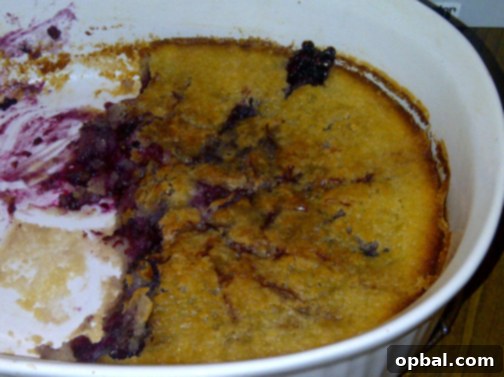
I distinctly remember making this Blackberry Cobbler in my previous apartment, and I’m quite certain its failure can be squarely blamed on that archaic oven, which I swear hailed directly from the Stone Age. The recipe called for self-rising flour, an ingredient typically celebrated for its ability to produce light, airy baked goods. However, in this instance, the “self-rising” aspect was a mere suggestion, completely ignored by my culinary creation. The topping, instead of becoming golden and fluffy, turned into a dense, unappetizingly spongy texture. To add insult to injury, it had a distinctly rubbery taste, a far cry from the sweet, fruit-filled comfort food it was meant to be. Despite its shortcomings, we still ate it – a testament to our stubbornness or perhaps just hunger. Thankfully, when I attempted the very same recipe in my new house, using an oven that actually belongs to this century, the cobbler emerged beautifully, perfectly risen and delicious. For once, a kitchen mistake I could confidently attribute not to my own “stupidity” but to truly ancient technology!
The Humbling Reality of Simple Mistakes: When the Brain Takes a Vacation
Even seasoned home cooks (and those aspiring to be) can have moments of astonishing oversight. Sometimes, the most basic steps of a recipe can simply slip your mind, leading to outcomes that are both bewildering and, in retrospect, undeniably funny. These are the moments when your brain seems to have taken a spontaneous vacation, leaving you to deal with the sticky, gooey, or otherwise unmanageable results.
Butterfinger Cookies: The Missing Dry Ingredients Debacle
You know that critical, seemingly obvious step in nearly every baking recipe that instructs you to “now add dry ingredients to wet ingredients?” Well, let’s just say I experienced a moment of profound forgetfulness with my attempt at Butterfinger Cookies. This wasn’t a subtle omission; it was a complete and utter oversight that led to a spectacularly sticky, completely unworkable dough. One might logically assume that a dough that refuses to come together, remaining stubbornly wet and impossibly sticky, would raise a red flag. Yet, in my culinary daze, this did not register. My brain, it seems, was vacationing in a distant, serene land, far from the realities of my kitchen. The resulting cookie attempt was a gloopy, unmanageable mess, a testament to the fact that sometimes, the simplest instructions are the easiest to overlook when your focus is elsewhere. It was a minor hiccup, yes, but one that left me with a valuable lesson in paying attention to every single line of a recipe.
Chicken Pot Pie: A Soggy Heartbreak
My old oven strikes again! This time, it sabotaged what was meant to be a comforting and visually appealing Chicken Pot Pie. As mentioned, that appliance had a mind of its own, refusing to maintain a consistent temperature, regardless of my careful adjustments. Any dish requiring elements to rise or puff up in the oven was destined for failure under its capricious reign. The pot pie was no exception. The beautiful, flaky crust, carefully adorned with decorative hearts, simply refused to achieve that coveted golden puffiness. Instead, the gravy filling, unable to be contained by a properly cooked crust, seeped through, creating a soggy, unappetizing mess. It was truly a shame, as the heart-shaped cutouts would have made it so charmingly pretty. This experience further solidified my belief that a reliable oven is not just a convenience, but a fundamental necessity for any home baker or cook who wishes to avoid soggy bottomed disappointments.
Multitasking Mayhem: The Perils of Distracted Cooking
In our fast-paced lives, multitasking often feels like a necessary skill, even in the kitchen. However, as I’ve learned through bitter experience, dividing your attention while following a recipe can be a recipe for disaster itself. My husband, Mr. Wishes, frequently points out my struggles with multitasking, and he’s not wrong. The moment my complete focus wavers from the task at hand, culinary catastrophes are almost guaranteed to emerge. Such was the case with my ill-fated Enchilada Pie.
Enchilada Pie: The Unintended Soup
This particular blunder was entirely, unequivocally my fault. I was juggling too many things at once, my mind flitting between tasks, and consequently, I neglected a crucial instruction in the enchilada recipe: “drain the liquid from the vegetables.” What was supposed to be a hearty, layered enchilada pie ultimately transformed into a watery, soupy concoction that more closely resembled enchilada soup. While it surprisingly still tasted decent – which, I suppose, counts for something – its visual appeal was undeniably repulsive. The more I look at that picture, the nastier it seems! It was a vivid reminder that sometimes, the best approach in the kitchen is single-minded focus. Sacrificing a few minutes of undivided attention can save an entire meal from becoming an accidental liquid diet.
Adventures with New Ingredients: When Experimentation Goes Horribly Wrong
Trying new ingredients and cuisines is one of the joys of cooking. It expands your palate and your culinary repertoire. However, sometimes these ventures into the unknown can lead to truly inedible results, leaving you questioning your adventurous spirit and perhaps even swearing off certain foods forever. My attempt at Sausage and Polenta falls squarely into this category, a dish so dreadful it received an immediate, horrified reaction from my significant other.
Sausage and Polenta: An Inedible Nightmare
I have absolutely no recollection of what this dish was even *supposed* to be, only the stark memory of its horrifying appearance and taste. The moment Mr. Wishes walked in the door and saw my creation, his exact words were, “What the heck is that?!” It was a perfectly valid question. Not only did it look incredibly scary and utterly unappetizing – a congealed, unidentifiable blob – but the polenta itself tasted precisely like cardboard. The entire meal was completely inedible, a culinary write-off that we quickly discarded. The experience was so traumatizing that I have yet to summon the courage to give polenta another try. The memory of that disastrous meal, and Mr. Wishes’s bewildered face, is enough to deter me from daring to attempt it again. It served as a potent lesson that not all culinary experiments are destined for success, and sometimes, it’s okay to admit defeat and move on from a particular ingredient.
The Forgotten Fundamentals: A Lesson in Basic Baking
Beyond the pictured disasters, countless other minor (and not-so-minor) mishaps have occurred in my kitchen. These often stem from forgetting the most fundamental elements of a recipe, leading to outcomes that are more liquid than solid, more soup than bread. It’s a humbling reminder that even with years of cooking experience, the basics can still trip you up.
NOT PICTURED: The Great Banana Bread Flour Fiasco
One notable, albeit unphotographed, disaster involved my Honey Banana Bread. Can you guess what crucial ingredient I managed to forget? You got it: the flour! Yes, the very foundation of any baked good, completely absent from my mixture. The result? A soupy, runny concoction that was less “bread” and more “banana bread soup.” While a novel concept, it was certainly not the fluffy, moist loaf I had intended. This particular incident stands as a shining example of how easily a mind can wander, even when dealing with something as straightforward as banana bread. It was a potent reminder that even the most experienced cooks can have brain farts, and sometimes, the simplest omissions lead to the most hilarious (and frustrating) results.
Embracing the Journey: Lessons from Kitchen Fails
Looking back at these kitchen failures, it’s easy to feel a pang of embarrassment, but mostly, I find humor and valuable lessons. Each burnt offering, each soggy crust, and each inedible concoction has contributed to my growth as a home cook. They’ve taught me the importance of reading recipes meticulously, understanding the quirks of my appliances, and perhaps most importantly, to embrace the process with a sense of adventure rather than perfectionism.
Cooking is a journey, not a destination. It’s filled with triumphs and, as this article clearly illustrates, plenty of trials. For every perfectly baked cake or deliciously seasoned meal, there might be several attempts that end up in the bin, or at the very least, are quickly forgotten. But it’s through these very failures that we learn, adapt, and eventually, succeed. So, to all the home cooks out there who’ve had their own share of kitchen disasters, remember: you’re not alone. These moments of culinary chaos are simply part of the adventure, enriching our stories and making our eventual successes all the sweeter. Keep experimenting, keep trying new things, and don’t be afraid to laugh at your own kitchen mishaps – they’re often the most memorable parts of the journey.